


Solar Power Slashes Delta-8 THC Production Costs (Here’s How Manufacturers Are Doing It)
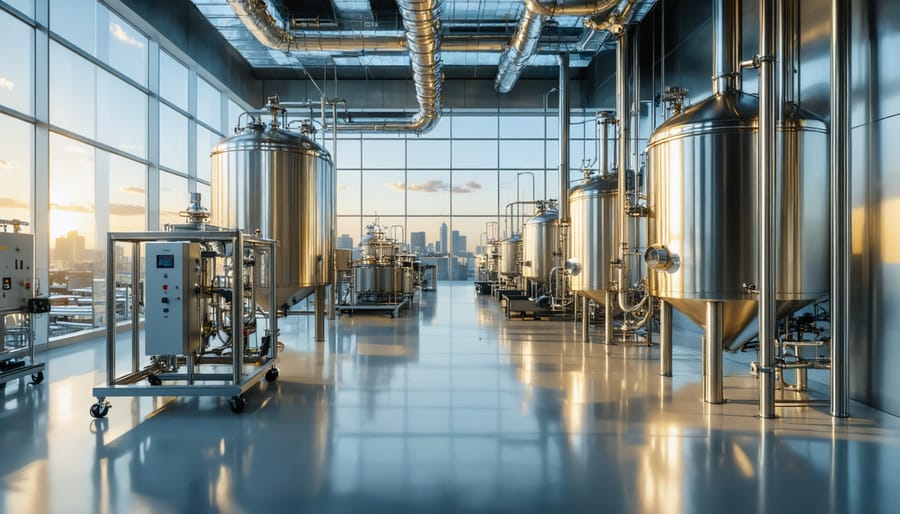
The cannabis industry faces a costly reality: Delta-8 THC extraction and distillation consume massive amounts of electricity, with operations spending $15,000 to $50,000 monthly on power bills alone. Solar energy is revolutionizing how producers manufacture Budpop’s delta 8 and similar products, slashing operational costs by up to 75% while meeting growing consumer demand for sustainably-produced hemp derivatives.
Installing commercial solar arrays specifically designed for extraction facilities delivers immediate financial benefits. Manufacturers running continuous distillation equipment, climate-controlled storage, and ventilation systems can achieve full energy independence within 18-36 months through federal tax credits, accelerated depreciation, and eliminated utility bills. One Colorado extraction facility reduced annual energy expenses from $240,000 to just $18,000 after transitioning to a 200kW solar system—savings that directly improved profit margins and competitive positioning.
The synergy between solar power and Delta-8 production extends beyond cost reduction. Clean energy certification opens doors to premium retail partnerships, appeals to environmentally-conscious consumers, and future-proofs operations against rising electricity rates and potential carbon regulations. With extraction equipment requiring consistent, reliable power, modern solar-plus-battery systems provide the stability necessary for quality control while protecting against grid outages that could compromise valuable product batches.
Whether you’re operating a small-batch distillation setup or a commercial-scale extraction facility, solar integration represents the most significant operational efficiency improvement available today.
What Is Delta-8 THC and Why Is Production So Energy-Intensive?
Delta-8 THC has emerged as one of the fastest-growing segments in the hemp industry. Unlike its more famous cousin Delta-9 THC found in marijuana, Delta-8 is primarily derived from legal hemp through a complex conversion process. Thanks to the 2018 Farm Bill, hemp-derived Delta-8 occupies a legal gray area that has allowed it to flourish in markets across the country, creating new opportunities for entrepreneurs and established businesses alike.
The surge in demand tells an impressive story. Market analysts project the Delta-8 industry could reach over $2 billion by 2025, as consumers seek its milder psychoactive effects and wider availability compared to traditional cannabis products. This rapid growth means more facilities are coming online to meet consumer needs, and with expansion comes a sobering reality: significant energy costs.
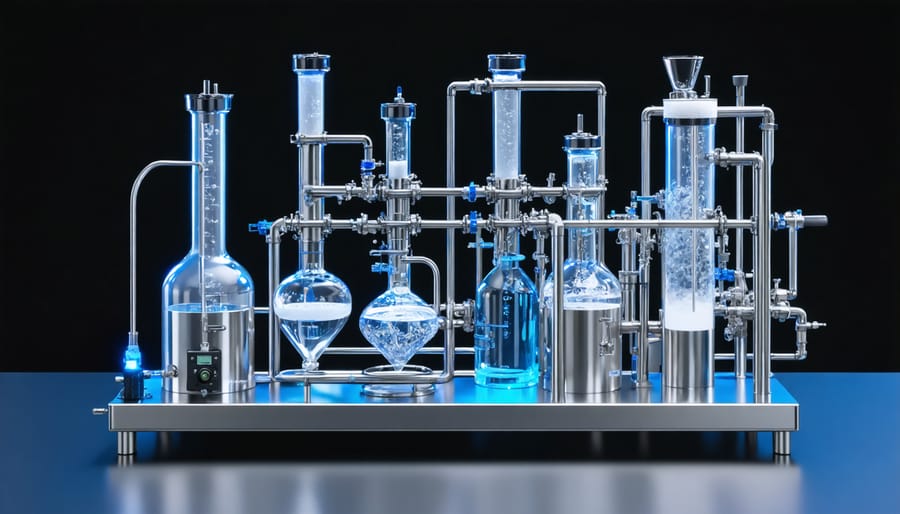
Here’s where things get energy-intensive. Producing Delta-8 THC isn’t a simple extraction like pressing olive oil. The process requires converting CBD from hemp into Delta-8 through chemical reactions that demand precise temperature control. Think of it like running multiple high-powered ovens and refrigerators simultaneously, 24/7.
The production chain includes several electricity-hungry steps. Industrial heating systems maintain exact temperatures during the conversion process, often running for hours or days at a time. Distillation equipment separates and purifies the compounds, requiring both intense heat and subsequent cooling. Climate-controlled environments keep your production facility at optimal conditions, while specialized filtration and purification systems run continuously to ensure product quality and safety.
For many Delta-8 producers, electricity represents one of the largest operational expenses—sometimes accounting for 20-30% of total overhead. One California producer shared that their monthly power bills exceeded $15,000 during peak production periods. These costs directly impact profitability and can make or break a business in this competitive market. That’s exactly why forward-thinking producers are exploring solar power as a game-changing solution.
The Energy Cost Problem Facing Delta-8 Manufacturers
Peak Hour Demand Charges Hit Hardest
Commercial electricity rates operate on a tiered structure, and here’s what makes it particularly challenging for Delta-8 THC producers: your facility runs hardest during the day when electricity costs peak. Unlike residential rates that stay relatively flat, commercial operations face demand charges—fees based on your highest electricity usage during premium hours, typically 12 PM to 6 PM.
Delta-8 production facilities are especially vulnerable because extraction equipment, climate control systems, and purification processes all run simultaneously during daylight hours when your team is working. These overlapping energy demands create costly spikes that utility companies penalize heavily. In California, peak demand charges can add $15-$30 per kilowatt to your monthly bill, and just one high-consumption hour can set your rate for the entire billing cycle.
Think of it like being charged for your biggest meal of the month, every single day. A single production run during peak hours might cost 3-4 times more than the same process at night. For small to mid-sized Delta-8 operations, these demand charges can represent 40-60% of total electricity costs—a significant drain on profitability that solar power directly addresses.
Climate Control Requirements Drive Up Bills
Delta-8 THC production facilities face a constant challenge that many Los Angeles homeowners understand all too well: keeping indoor spaces at the perfect temperature and humidity levels year-round. Production and storage areas require precise climate control—typically between 60-70°F with humidity around 40-50%—to maintain product quality and comply with safety regulations.
In Southern California’s warm climate, where summer temperatures regularly soar above 90°F, HVAC systems work overtime. These industrial-grade systems run 24/7, consuming massive amounts of electricity even during off-peak hours. Unlike residential cooling needs that fluctuate throughout the day, production facilities can’t afford temperature variations that might compromise their products.
The storage areas present an additional challenge. Delta-8 THC degrades when exposed to heat, meaning even a few degrees of temperature drift can result in product loss worth thousands of dollars. This creates a non-negotiable energy demand that traditional power sources struggle to support cost-effectively.
For facility operators, these climate control requirements typically represent 40-60% of total electricity costs—a significant expense that cuts directly into profit margins. The good news? Solar energy offers a practical solution to offset these predictable, consistent energy demands while protecting your bottom line.
How Solar Energy Transforms Delta-8 Production Economics
Perfect Timing: Solar Peak Hours Match Production Schedules
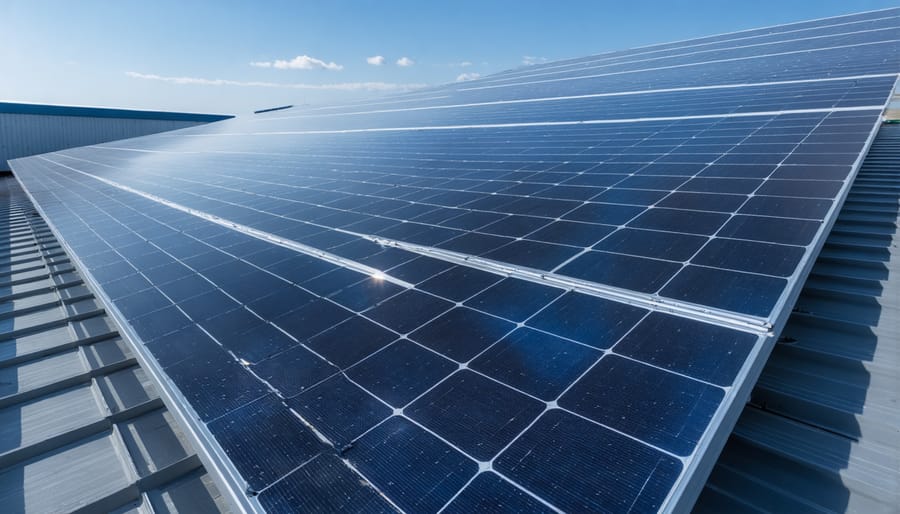
Delta-8 THC production facilities operate primarily during daytime hours when quality control teams, processors, and extraction specialists are on-site. This schedule creates a remarkable synergy with solar energy systems, which generate peak power during the same midday windows.
This natural alignment means your facility consumes solar electricity as it’s being produced, rather than drawing expensive power from the grid during peak demand hours. In Los Angeles, utility companies charge significantly higher rates between 4 PM and 9 PM—exactly when traditional facilities face steep energy bills. With solar power, your production schedule captures maximum output between 9 AM and 3 PM, when panels perform at their best.
The result? Many Delta-8 producers report 60-70% reductions in monthly electricity costs simply by timing extraction runs, distillation processes, and climate control operations with solar availability. One Riverside facility saved $3,200 monthly by shifting their most energy-intensive processes to coincide with solar peak hours, eliminating nearly all peak-rate charges while maintaining production targets. This strategic timing transforms solar from just an energy source into a powerful cost-management tool.
Real Cost Savings: What Manufacturers Are Seeing
Delta-8 THC manufacturers are discovering that solar power delivers impressive financial returns. Recent industry data shows production facilities are reducing their electricity costs by 40-70% after installing commercial solar systems – a game-changer for operations running extraction equipment and climate control around the clock.
Take a mid-sized facility in Southern California as an example. Before solar, monthly energy bills averaged $8,500. After installing a 150kW solar array, those costs dropped to approximately $2,800 monthly – that’s savings of $68,400 per year. With system installation costs ranging from $250,000-$400,000 for facilities this size, most manufacturers see complete payback within 3-6 years.
The math becomes even more attractive when you factor in federal tax incentives. The Investment Tax Credit allows businesses to deduct 30% of solar installation costs, effectively shortening payback periods by 12-18 months. Some states offer additional rebates and accelerated depreciation benefits that further improve returns.
What’s particularly encouraging is how predictable these savings become. Unlike fluctuating utility rates that typically increase 3-5% annually, solar provides stable, locked-in energy costs for 25+ years. One Colorado producer reported their solar investment paid for itself in just four years, and they’re now banking those savings for facility expansion.
For manufacturers concerned about upfront costs, various financing options – including power purchase agreements and solar leases – allow you to start saving immediately without large capital outlays.
Solar System Requirements for Delta-8 Facilities
Battery Storage: Essential for 24/7 Operations
Delta-8 THC production demands consistent climate control and processing power around the clock—even when the sun isn’t shining. This is where battery storage systems become game-changers for your facility.
Modern lithium-ion batteries store excess solar energy generated during peak sunshine hours, then release it during evening shifts or cloudy days. For a mid-sized extraction facility running 24/7, a properly sized battery system can reduce grid dependence by 60-80%, translating to savings of $3,000-$5,000 monthly.
The upfront investment typically ranges from $50,000-$150,000 depending on your energy needs, but federal tax credits cover 30% of these costs. Most facilities see full payback within 5-7 years—and batteries last 10-15 years with proper maintenance.
Here’s the real benefit: battery backup protects your valuable inventory during power outages. One California producer shared how their battery system saved $40,000 worth of product when grid power failed during a critical extraction cycle.
Combined with solar panels, batteries transform your operation from energy-dependent to energy-independent, giving you predictable costs and peace of mind.

Success Story: California Delta-8 Producer Cuts Energy Costs by 65%
When Green Valley Hemp Solutions started producing Delta-8 THC in their 15,000 square-foot facility outside San Diego in 2021, owner Maria Chen quickly realized that energy costs were eating into their profits more than any other operational expense.
“Our monthly electricity bills were averaging $8,500, sometimes spiking to $11,000 during summer months when our cooling systems worked overtime,” Maria explains. “We were running extraction equipment, distillation units, climate control systems around the clock. I knew something had to change or we’d never reach profitability.”
After researching the solar advantages in California, Maria decided to take the leap. In March 2022, Green Valley Hemp Solutions installed a 120-kilowatt commercial solar array on their facility’s roof and adjacent property.
The decision-making process took three months. Maria consulted with three different solar providers, ultimately choosing a system sized to cover 100% of their energy needs. “The upfront investment was $185,000, but after federal tax credits and state incentives, our actual cost dropped to $128,000,” she says.
Installation took just four weeks, completed with minimal disruption to production operations. The solar panels went live in April 2022, and the results exceeded expectations.
Within the first year, Green Valley’s electricity costs plummeted from $102,000 annually to just $36,000—a remarkable 65% reduction. “We’re now paying only for nighttime energy usage and backup power,” Maria notes. “Our system generates surplus power during peak daylight hours, which gets credited back through net metering.”
The financial impact transformed their business. The solar installation will pay for itself in just 3.5 years, and with a 25-year warranty on the panels, Green Valley expects to save over $1.6 million in energy costs over the system’s lifetime.
“Beyond the savings, there’s something powerful about telling customers we’re producing their Delta-8 products using clean, renewable energy,” Maria adds. “It aligns with the wellness-focused values of our customer base and gives us a competitive edge.”
For other Delta-8 producers considering solar, Maria’s advice is straightforward: “Do the math, get multiple quotes, and don’t wait. Every month without solar is money left on the table.”
Beyond Cost Savings: Marketing and Regulatory Advantages
While slashing energy bills is compelling, solar-powered Delta-8 THC production delivers powerful advantages that extend far beyond your bottom line. In today’s marketplace, sustainability isn’t just good ethics—it’s good business.
Consumer research shows that eco-conscious buyers actively seek products from environmentally responsible companies. By powering your Delta-8 production with solar energy, you create an authentic sustainability story that resonates with this growing demographic. Your product labels can proudly showcase “solar-powered production,” differentiating your brand in an increasingly crowded market.
This positioning becomes even more valuable as environmental regulations tighten. The cannabis and hemp industries are facing growing scrutiny over their energy consumption, particularly in states like California where environmental standards are strict. Early adoption of solar power positions your operation ahead of potential regulatory requirements, avoiding costly retrofits down the road.
Several forward-thinking Delta-8 producers have already experienced these benefits firsthand. One California manufacturer reported a 35% increase in wholesale partnerships after highlighting their solar-powered facilities, with retailers specifically citing sustainability as a decision factor. Another producer successfully negotiated better insurance rates by demonstrating reduced environmental risk.
Looking ahead, carbon pricing and emissions regulations are expanding nationwide. Facilities powered by clean energy will have significant competitive advantages, potentially avoiding carbon taxes while qualifying for green business certifications. These credentials can open doors to larger distribution networks and premium retail partnerships that increasingly require environmental compliance from suppliers.
By making the switch to solar now, you’re not just reducing costs—you’re building a more valuable, future-proof business that appeals to conscious consumers and stays ahead of regulatory changes.
Getting Started: Steps for Delta-8 Producers Considering Solar
Making the switch to solar power for your Delta-8 production facility is more straightforward than you might think. Here’s a practical roadmap to guide you through the process, with each step designed to set you up for long-term success and savings.
**Start with an Energy Audit**
Before investing in solar panels, understand exactly how much energy your facility uses. Request a comprehensive energy audit that examines your extraction equipment, HVAC systems, lighting, and other operations. This assessment reveals your baseline energy consumption and helps determine the right solar system size for your needs. Many solar providers offer free audits, making this an easy first step with zero upfront cost.
**Conduct a Site Assessment**
Not all facilities are equally suited for solar installation. A professional site assessment evaluates your roof condition, available space, sun exposure throughout the day, and any shading issues from nearby structures or trees. If your roof isn’t ideal, ground-mounted systems offer an excellent alternative. California’s abundant sunshine means most locations are well-suited for solar, but a proper assessment ensures you maximize your investment.
**Explore Your Financing Path**
You don’t need hundreds of thousands in cash to go solar. Several financing options make solar accessible for Delta-8 producers:
Power Purchase Agreements (PPAs) let you pay only for the electricity generated, with no upfront costs. Solar loans spread the investment over time while you immediately benefit from energy savings. Cash purchases offer the highest long-term returns and fastest payback periods. Each option has unique advantages depending on your cash flow and business goals.
**Claim California Incentives**
California offers substantial support for commercial solar adoption. The Federal Investment Tax Credit provides a 30% tax credit on your solar installation costs. California’s Self-Generation Incentive Program (SGIP) offers additional rebates, especially when pairing solar with battery storage. Your local utility may provide extra incentives for businesses reducing grid demand during peak hours.
**Choose the Right Solar Partner**
Success depends on selecting an experienced commercial solar provider who understands industrial energy needs. Look for companies with proven track records in manufacturing facilities, proper licensing and insurance, and familiarity with California’s incentive programs. Ask for references from similar-sized operations and review their post-installation support services.
The right partner will handle permitting, interconnection agreements, and ongoing maintenance, letting you focus on producing quality Delta-8 products while your energy costs drop significantly.
Making the switch to solar power for your Delta-8 THC production facility isn’t just an environmental choice—it’s a smart business decision that positions you ahead of the competition. Unlike traditional energy costs that fluctuate unpredictably, solar power gives you control over your expenses for decades to come. Once your system is installed, you’ll enjoy locked-in energy rates while your competitors struggle with rising utility bills.
The numbers speak for themselves. Manufacturers who’ve embraced solar energy are seeing 40-60% reductions in their operating costs, money that goes straight back into growing their business. Beyond the immediate savings, you’re also building a brand that resonates with today’s conscious consumers who actively seek out sustainably-produced products. That’s a competitive edge you can’t ignore.
The path forward is simpler than you might think. Your first step is getting a professional energy assessment to understand your facility’s specific solar potential. This evaluation will show you exactly how much you can save, what incentives you qualify for, and how quickly your investment will pay for itself.
The solar opportunity in Delta-8 production won’t wait forever—early adopters are already reaping the benefits of lower costs and enhanced market positioning. Take that first step today by scheduling your energy assessment. Your future self (and your bottom line) will thank you for making this strategic move toward sustainable, cost-effective production.

