


How to Snow Foam Your EV Using Minimal Water: A Complete Pre-Wash Routine
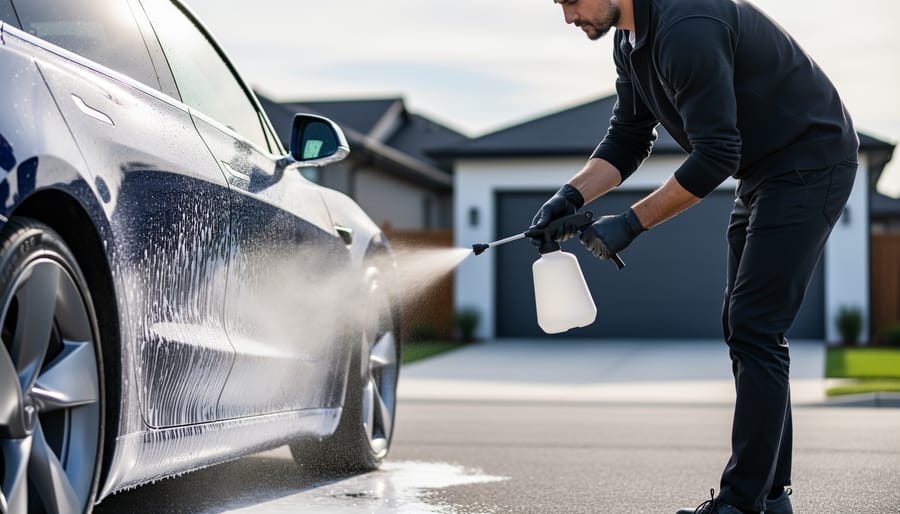
A low-water snow foam pre-wash for your EV takes about 15 minutes and uses less than half a gallon of water while safely lifting dirt and grime before your main wash. This waterless or near-waterless method protects your vehicle’s paint, respects LA’s ongoing water conservation needs, and aligns perfectly with the environmental values that drew you to electric vehicles in the first place.
If you’ve already made the switch to solar power and an electric car, you understand how solar works to reduce your carbon footprint. Your car care routine deserves the same thoughtful approach. Traditional pre-wash methods can waste 10 to 20 gallons before you even pick up a wash mitt, but snow foam applied with a pump sprayer and wiped strategically delivers the same protective benefits without the runoff.
Los Angeles homeowners saved an average of $1,200 annually by pairing water-efficient practices with solar energy in 2025, and that trend continues as drought conditions persist. This routine works because thick foam clings to vertical surfaces long enough to encapsulate dirt particles, allowing them to be safely removed without hard scrubbing that damages clear coat. You’ll protect your EV’s finish, conserve a precious resource, and maintain the clean, sustainable lifestyle you’ve worked to build.
Why EV Owners Should Adopt Low-Water Snow Foam Pre-Washing
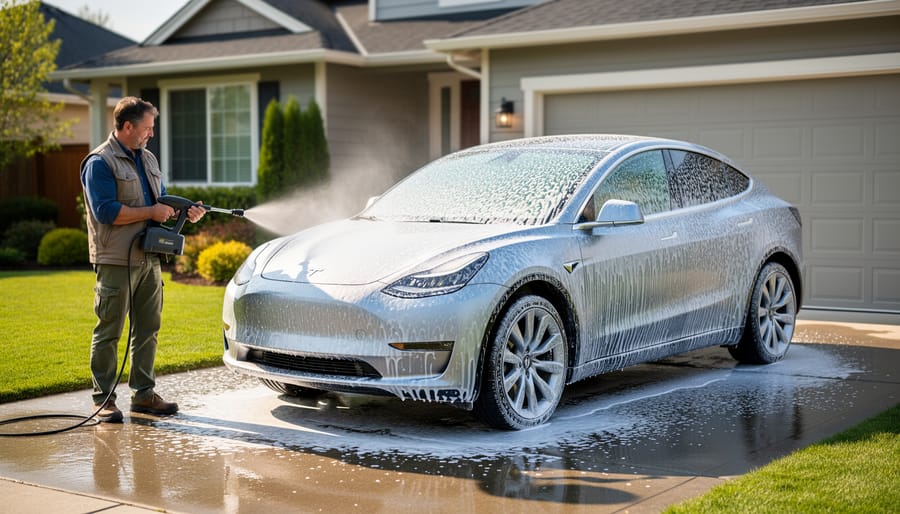
Electric vehicles come with advanced technology embedded in their exterior surfaces that traditional car wash methods can easily damage. Your EV’s paint is surrounded by delicate sensors, cameras for parking assistance and autopilot features, and charging port seals that need protection from harsh water jets and abrasive contact. When you pre-wash with snow foam you’re lifting dirt particles away from the surface before any physical contact occurs, reducing the risk of scratching these components or forcing water into sensitive areas.
For Los Angeles homeowners who’ve invested in California solar systems, water conservation isn’t just an environmental choice, it’s a practical necessity during drought restrictions. Home driveway washing often means limited water pressure and potential penalties for excessive use. A low-water snow foam routine addresses these constraints head-on, letting you maintain your vehicle properly without flooding your driveway or watching your water meter spin.
The alignment runs deeper than practicality. Choosing an EV signals your commitment to reducing environmental impact, and that same mindset extends to how you care for it. Using 70% less water while achieving superior cleaning results isn’t a compromise, it’s the logical next step for someone who’s already invested in renewable energy and sustainable transportation.
What You’ll Need: Tools and Products for Low-Water Snow Foam
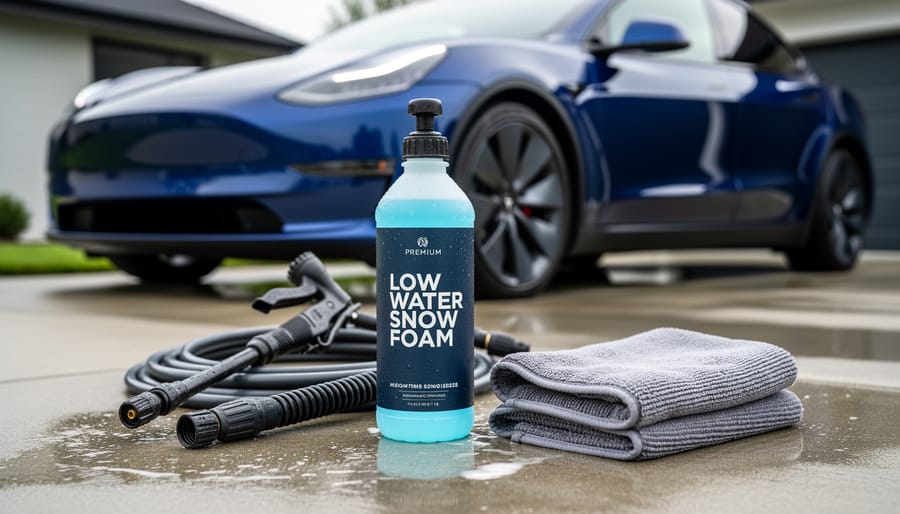
Choosing the Right Snow Foam Solution
Selecting a snow foam solution for your EV requires attention to three key factors: pH balance, environmental impact, and concentration flexibility.
Look for pH-neutral formulas (between 6 and 8 on the pH scale) specifically marketed as “paint-safe” or “ceramic coating friendly.” These won’t strip protective wax layers or degrade the rubber seals around your charging port and door weatherstripping. Avoid alkaline heavy-duty formulas designed for commercial trucks, as these can dull your EV’s finish over time.
Eco-conscious options carry biodegradable certifications and skip phosphates and harsh solvents. Many EV owners in LA prefer plant-based surfactants that break down safely in drought-tolerant landscaping. Check product labels for “gray water safe” or “septic friendly” designations.
For low-water application, choose concentrated formulas you can dilute yourself rather than pre-mixed products. A typical ratio is 1 part foam to 10 parts water for standard cleaning, but you can increase to 1:5 for heavily soiled vehicles without wasting water on multiple passes. This flexibility lets you adjust based on your specific cleaning needs while keeping runoff minimal.
Low-Pressure Equipment Options
Traditional pressure washers require significant water flow and outdoor hookups that many LA homeowners lack. Portable battery-powered washers offer a practical solution, drawing water from a five-gallon bucket and operating on rechargeable lithium batteries. Models like the Worx Hydroshot or Ryobi 18V systems deliver enough pressure for effective snow foam application, around 300-450 PSI, without permanent plumbing connections.
These portable units work particularly well for EV owners with solar panels who can charge batteries during peak production hours, aligning car care with clean energy use. You’ll achieve comparable foam coverage to AC-powered washers while using 40-60% less water per session.
If you already own a traditional pressure washer, add a flow restrictor valve to reduce output. This simple attachment costs under twenty dollars and cuts water consumption by half while maintaining enough pressure to generate proper foam. Many LA hardware stores stock these valves in their plumbing sections.
For homeowners without any pressure equipment, hand-pump garden sprayers can distribute snow foam, though coverage won’t be as dense. This method suits light pre-washing but requires more physical effort and multiple refills for full vehicle coverage.
Safety and Preparation: Protecting Your EV
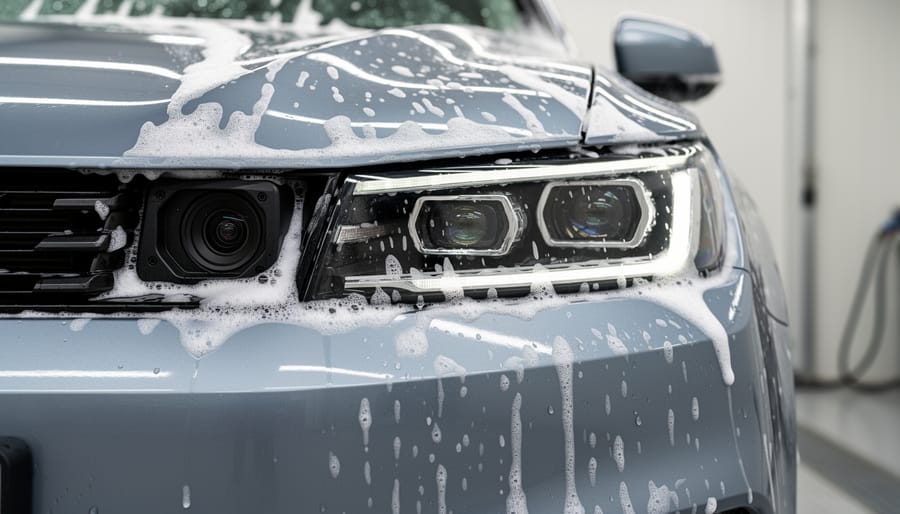
Before you spray a single drop, take five minutes to protect your EV’s sensitive components and set yourself up for a safe, effective wash. Modern electric vehicles have cameras, sensors, and charging ports that require more care than conventional cars, and a few simple precautions will prevent costly damage.
Check and Seal Your Charging Port
Your charging port is the most vulnerable point on your EV. Even if it has a sealed cover, double-check that it’s firmly closed before you start. Water intrusion here can damage the connector pins and potentially void your warranty. If you recently used your home EV charger give the port area a quick wipe to remove any dust before sealing it. Most modern EVs have waterproof ports rated for rain, but direct spray from a pressure washer is a different story.
Work in the Shade
Los Angeles sun will dry snow foam in under a minute, leaving streaks and making the product work against you instead of for you. Park in shade or work during early morning or late afternoon. If you don’t have shade, wet the vehicle’s surface lightly before applying foam to slow evaporation.
Understand Local Water Rules
LA has specific regulations about residential vehicle washing. Check the LADWP vehicle washing rules to confirm you’re allowed to wash at home and understand any restrictions on runoff. Generally, you’ll need to ensure your driveway drains properly and you’re not creating excessive runoff into the street. The low-water approach described here helps you stay compliant while keeping your EV clean.
The Complete Low-Water Snow Foam Pre-Wash Process
Step 1: Pre-Inspection and Dry Debris Removal
Walk around your EV and look for heavy mud clumps, stuck leaves, or bird droppings. Use a soft-bristle detailing brush to gently sweep away loose dirt from panel gaps, around the charging port, and along the lower rocker panels. A microfiber cloth works well for brushing off dry dust from horizontal surfaces like the hood and roof.
Pay special attention to areas behind the wheels and under the side mirrors where dirt accumulates. If you spot tar spots or bug splatter, mark these mentally, they’ll need extra dwell time during the foam stage. Check that your charging port door is fully closed and latched.
This dry removal step prevents you from pushing abrasive particles across the paint when you apply foam, and it reveals which sections need concentrated cleaning. Spend two minutes on this inspection and you’ll use less product while getting better results.
Step 2: Mixing and Applying Snow Foam
Getting your snow foam mixture right makes all the difference when you’re working with limited water. Start with a dilution ratio of 1:10 (one part foam to ten parts water) in your foam cannon’s reservoir, this is slightly more concentrated than standard applications to compensate for less rinsing power. Many pH-neutral formulas designed for EVs will specify “low-water” or “waterless” ratios on the bottle, so check those first.
Fill your foam cannon about three-quarters full, leaving room for air pressure to mix the solution properly. Attach it to your pressure washer or battery-powered unit, and test the spray pattern on the ground before touching your vehicle, you want thick, clinging foam, not runny liquid.
Here’s where most people get it wrong: they start at the top. Instead, begin at the bottom panels and wheel arches where dirt accumulates heaviest. Work your way up in horizontal passes, overlapping each section by about two inches. This bottom-to-top approach lets gravity work with you, upper foam drips down to reinforce lower sections, giving you double coverage without using extra product. Keep the nozzle about two feet from the surface and move steadily to avoid missed spots.
Step 3: Dwell Time and Foam Action
After applying the snow foam, let it sit for 3 to 5 minutes to work its magic. The exact dwell time depends on your formula and the outside temperature, hotter days mean faster drying, so lean toward the shorter end. You’ll see the foam change from thick white bubbles to a thinner, runnier consistency as it breaks down dirt and grime.
Watch for the foam sliding down the paint, carrying away embedded contaminants. If it starts drying or turning into a film before the time is up, you’ve waited too long. In LA’s heat, this can happen quickly, so work in sections if needed rather than foaming the entire EV at once.
For stubborn spots like the lower panels or behind the wheels, you can carefully reapply foam to those areas while the rest continues working. This targeted approach uses less product than foaming everything twice and gives problem zones the extra attention they need without wasting solution on already-clean sections.
Step 4: Low-Water Rinse Technique
Start rinsing from the roof and work downward in continuous sweeping passes, allowing gravity to help carry foam and loosened dirt off the vehicle. Set your pressure washer to its lowest effective setting, around 500-800 PSI works well for most EVs, and hold the nozzle at a 45-degree angle about two feet from the surface.
Use a side-to-side motion rather than spot-spraying, keeping the water moving. This prevents concentrated streams from wasting water while ensuring even coverage. Focus the water flow on panel seams and body lines where foam accumulates, letting runoff clean adjacent flat surfaces.
If you notice stubborn foam patches, resist the urge to blast them. Instead, make an additional pass with the same gentle pressure. For maximum efficiency, rinse one complete section, like the entire driver’s side, before moving on, rather than jumping between areas.
You’ll typically use 2-3 gallons for a complete rinse compared to 15-20 gallons with traditional methods. Watch the runoff: when it runs clear instead of sudsy, that section is done.
Step 5: Quick Drying and Spot Check
After rinsing, immediately blot standing water from horizontal surfaces using a clean microfiber towel to prevent mineral deposits. Work quickly across the hood, roof, and trunk, then inspect the paint at eye level under good lighting. Run your hand gently across panels, truly clean paint feels slick, not gritty. Check around door handles, mirrors, and lower panels where dirt accumulates. If the surface still feels textured or you spot streaks, note those areas for targeted attention during your main wash. For EVs left to air-dry after pre-wash only, ensure charging port covers and door seals are wiped down to prevent water intrusion.
Verifying Your Results and When to Proceed
After your final rinse, take a moment to verify the pre-wash did its job. Run your hand lightly over the lower panels and wheel arches, the areas that collect the most grime. The surface should feel noticeably smoother, without gritty particles that could scratch during a contact wash. Visually inspect from multiple angles: heavy dirt, mud splatter, and road film should be gone, though you might still see bonded contaminants like water spots or tree sap (those require different treatment).
Use this checklist to confirm you’re ready to move forward:
- Paint feels smooth to the touch, not gritty or rough
- No visible mud, thick dust, or chunky debris remains on panels
- Water sheets off cleanly rather than beading up with dirt residue
- Wheel wells and lower trim appear visibly cleaner
- No streaks of foam or product remain after rinse
If you notice stubborn patches, common around badges, door handles, or charging port covers, reapply foam to just those areas and give it another dwell cycle. For lightly soiled EVs in dry LA weather, this pre-wash alone might be sufficient between deeper cleanings. If you’re proceeding to a contact wash, you’ve successfully removed the abrasive particles that cause swirl marks, protecting your EV’s finish while using a fraction of the water a traditional hose-down would require.
Water Usage Tracking: Measuring Your Conservation Success
Tracking your water use transforms this routine from a good habit into measurable conservation success. Install a simple inline flow meter (around $20-30 at hardware stores) between your hose and pressure washer to capture exact usage per session. Most EV owners find they use 2-3 gallons for the entire snow foam pre-wash, compared to 20-40 gallons for a traditional bucket-and-hose wash.
Keep a simple log on your phone noting the date, meter reading, and vehicle condition before washing. Over a few months, you’ll establish your baseline and can adjust technique to maximize efficiency. For solar homeowners already monitoring energy production, adding water tracking creates a complete sustainability picture. Your routine becomes quantifiable proof that vehicle care and environmental responsibility work together, not against each other.
Common Questions About Low-Water Snow Foam for EVs
How much water does this routine actually save compared to traditional washing?
A typical garden hose wash uses 80-140 gallons, while this low-water snow foam pre-wash uses just 5-15 gallons for the entire process. That’s a reduction of roughly 90%, which adds up to significant savings on your water bill and helps address LA’s ongoing drought concerns.
Will snow foam damage my EV’s sensors or ceramic coating?
pH-neutral snow foam is safe for all EV sensors, cameras, and ceramic coatings when applied correctly without direct high-pressure spray on sensitive components. The foam’s gentle chemical action actually protects coatings better than abrasive contact washing.
How often should I do this pre-wash routine in LA’s climate?
For most LA EV owners, every two weeks is ideal during dry months and weekly during winter when road salt and rain residue accumulate. If you park under trees or near construction, increase frequency to weekly year-round.
Why isn’t the foam sticking evenly to my vehicle?
Uneven foam coverage usually means your dilution ratio is off or the surface is too hot. Remix with less water in your foam cannon, work in shade, and ensure your vehicle’s surface temperature is below 75°F for best results.
Beyond these basics, many EV owners worry whether this routine truly cleans as well as traditional methods. The answer is yes, provided you’re using it as intended: a pre-wash removes 70-80% of dirt and contaminants before you ever touch the paint, which is exactly what prevents scratches during the main wash. Think of it as the same efficiency mindset that led you to consider LA solar rebates for your home energy system.
For seasonal adjustments, summer heat requires faster work and more frequent misting to prevent foam from drying, while winter may need slightly longer dwell times since cooler temperatures slow chemical action. If you’re getting inadequate cleaning, the issue is usually insufficient dwell time or starting with an excessively dirty vehicle that needs a double application on lower panels.
Adopting this low-water snow foam routine fits perfectly with the values that likely drove you to choose an EV and consider solar power: sustainability, efficiency, and long-term cost savings. By using just a fraction of the water required for traditional washing, you’re cutting your water bill while protecting your vehicle’s finish and sensitive components. Most LA homeowners report saving 15-20 gallons per wash with this method, which adds up significantly over a year.
Start with the basic process outlined here, then adjust foam concentration, dwell time, and rinse technique based on how dirty your car typically gets and your available water pressure. You’re not just maintaining your investment, you’re contributing to LA’s critical water conservation efforts, one wash at a time. Every gallon you save matters in our drought-prone region, and this routine proves you don’t have to choose between a clean vehicle and responsible resource use.

