


Energy Storage Operators Running Modern Power Plants: What LA Homeowners Need to Know
Energy storage operators are transforming how utilities manage electricity grids by capturing surplus power during low-demand periods and releasing it when consumption peaks. This same proven technology now works in your Los Angeles home, letting you store solar energy generated during sunny afternoons for use during expensive evening hours when electricity rates soar. The result? Homeowners who pair solar panels with battery storage typically slash their electric bills by 70-90%, while gaining backup power during outages and reducing dependence on the grid.
Think of energy storage operators as the choreographers of modern power systems. They monitor real-time electricity prices, predict demand spikes, and strategically charge or discharge massive battery arrays to balance supply with consumption. When you install a home battery system, you’re essentially becoming your own micro-utility operator, using the same logic that keeps California’s grid stable during heat waves and sunset hours.
The financial upside is compelling. A Pasadena family who added a 13.5 kWh battery to their existing solar array cut their monthly utility bill from $180 to just $22, recouping their investment in under six years. They charge their battery with free solar energy during the day, then run their home on stored power during peak evening rates that can reach $0.50 per kilowatt-hour.
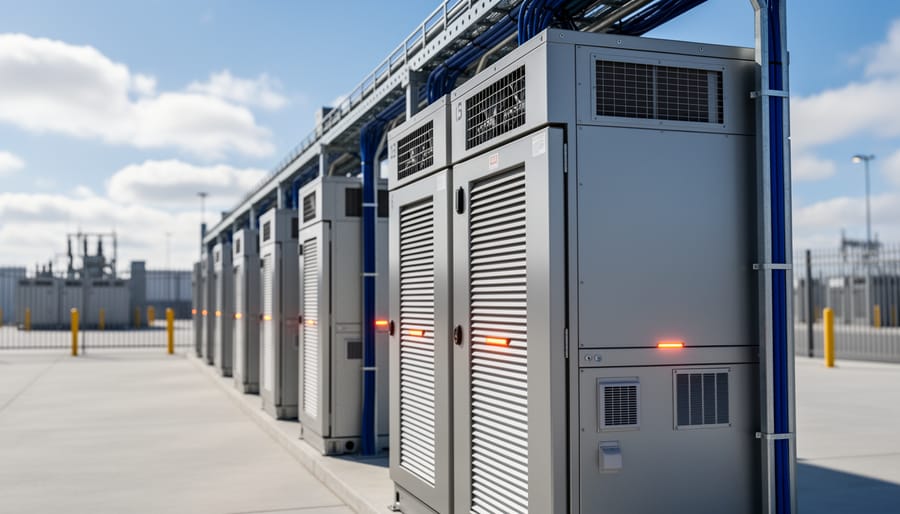
Understanding how utility-scale energy storage works helps you make smarter decisions about your own system. The principles powering multi-megawatt grid facilities, detailed on powerengineeringpractice.comscale down perfectly for residential applications.
What Energy Storage Operators Actually Do
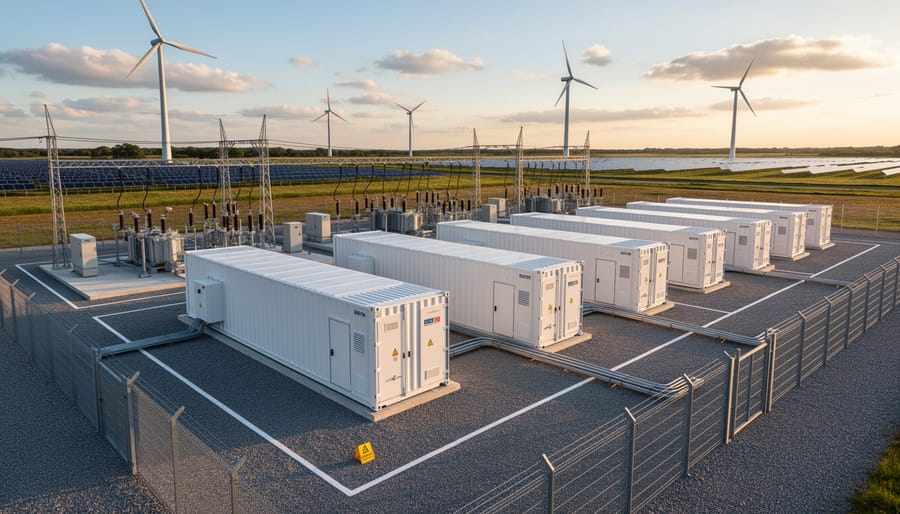
Energy storage operators are the behind-the-scenes professionals who keep modern power plants running efficiently. They monitor massive battery systems, often the size of warehouses, and make split-second decisions about when to store energy and when to release it back to the grid. Think of them as air traffic controllers for electricity, constantly watching supply and demand to ensure the lights stay on across thousands of homes and businesses.
Their job starts when renewable sources like solar farms and wind turbines generate more power than the grid needs at that moment. Instead of wasting this clean energy, operators direct it into large-scale battery storage systems. They track weather patterns, predict demand spikes during hot LA afternoons when everyone cranks up their air conditioning, and calculate the optimal times to discharge stored energy back into the system.
The daily responsibilities of these operators include:
- Monitoring battery health and temperature to prevent degradation and maximize lifespan
- Optimizing charge and discharge cycles based on electricity pricing and grid conditions
- Responding to grid demands during peak usage periods or unexpected outages
- Coordinating with utility companies to provide ancillary services like frequency regulation
- Analyzing performance data to improve efficiency and predict maintenance needs
What makes this relevant to homeowners is that modern residential battery systems now automate these same principles. The sophisticated software managing your home battery essentially acts as your personal energy storage operator, running 24/7 without requiring you to make these decisions manually. It learns your usage patterns, tracks utility rates, and optimizes when to store your solar energy versus when to draw from it, all the complex calculations professional operators perform at power plants, scaled down to protect your household budget and energy independence.
Why This Technology Matters for Your Home Solar System
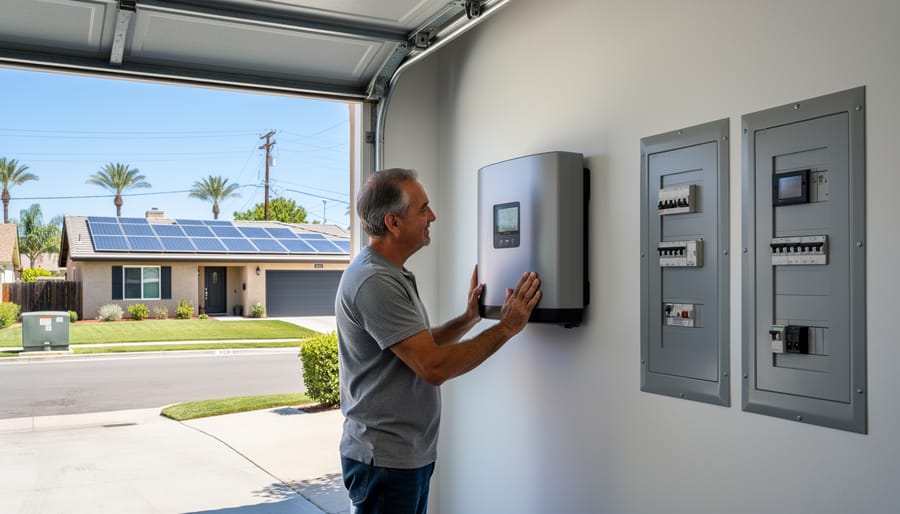
The technology managing utility-scale power plants now runs inside home battery systems, which changes everything for solar panel owners. Those sophisticated algorithms that grid operators use to balance millions of dollars worth of stored electricity? They’re the same ones your home battery uses to decide when to charge, when to discharge, and how to squeeze every dollar from your solar panels.
Here’s what that means for you: modern home batteries don’t just store energy, they actively manage it. While you’re at work and your panels generate peak power, your battery learns your household patterns and grid pricing. It knows Southern California Edison charges triple after 4 PM, so it holds that stored energy until rates spike. The system makes hundreds of micro-decisions daily, the same way operators at commercial storage facilities maximize profit margins, except your system maximizes your savings.
This intelligent management turns solar panels from a part-time generator into a 24-hour money-saving machine. Without storage, excess solar power goes to the grid for modest credits. With operator-level battery management, that same power offsets your most expensive evening usage. Understanding how home solar works becomes crucial here, panels generate power during sunshine hours, but your household uses most electricity mornings and evenings when rates peak.
The investment return difference is substantial. LA homeowners with solar-only systems typically offset 40-60% of their electric bills. Add smart storage with professional-grade management software, and that number jumps to 85-95%. You’re essentially hiring a digital energy operator who works around the clock, costs nothing after installation, and never takes a day off.
How Smart Energy Storage Cuts Your Electric Bill
Time-of-Use Rate Optimization
Los Angeles residents face some of California’s highest electricity rates, with costs jumping dramatically between 4 PM and 9 PM on weekdays. Your home battery system runs continuously in the background, tracking these rate changes and making split-second decisions about when to pull from your stored solar energy versus the grid. During those expensive evening hours when you’re cooking dinner and running air conditioning, the battery automatically discharges the solar power it collected earlier, keeping you off the grid entirely when rates peak at 50-60 cents per kilowatt-hour.
The system learns your household patterns over time, anticipating your heaviest usage periods and ensuring enough stored capacity remains available. On particularly hot days when your AC runs longer, the battery adjusts its discharge strategy to cover the extended demand without touching grid power during premium pricing windows. You can check your utility’s time-of-use schedule and apply solar optimization tips to squeeze even more value from each stored kilowatt-hour, but the battery handles most optimization automatically without requiring your daily attention.
Backup Power That Pays for Itself
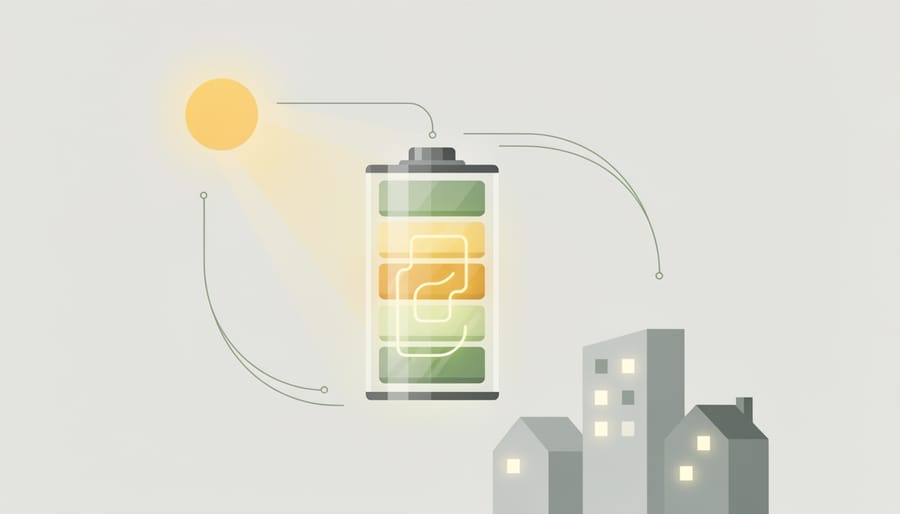
Traditional backup generators sit in your garage collecting dust until the next power outage, offering zero value between emergencies. A home backup battery system works entirely differently, it generates savings every single day while standing ready for outages.
Here’s how it pays for itself: Your battery charges from solar panels during the day, then automatically powers your home during expensive evening peak hours. This dual function means you’re not just buying emergency protection, you’re investing in equipment that cuts your electric bill year-round. Many LA homeowners report saving $80, $150 monthly through this daily cycle, which can cover the battery’s financing cost entirely.
During an outage, your system seamlessly switches to backup mode, keeping essential appliances running without the noise, fuel costs, or maintenance headaches of gas generators. Between outages, it’s quietly erasing peak-rate charges from your bill. The math works: a system that saves $100 monthly delivers $1,200 annually in avoided electricity costs, turning what seems like an emergency-only purchase into a profit-generating asset that happens to provide blackout protection as a bonus feature.
Real LA Homeowner Success Stories
Maria Rodriguez in Glendale watched her monthly electric bill drop from $320 to just $48 after installing a 10kW solar system paired with a 13.5kWh battery in early 2025. Her home battery automatically charges during the day when her panels generate excess power, then supplies electricity during expensive evening hours when her family is cooking dinner and running air conditioning. During the summer heat wave of 2025, when many neighbors faced bills exceeding $400, Maria’s system kept her costs stable. The battery paid for itself in savings within six years, far faster than she expected.
The Chen family in Pasadena experienced similar results with their 8kW solar array and dual battery setup totaling 20kWh of storage. Before solar, their average monthly bill hovered around $280. After installation in spring 2024, they consistently pay between $15 and $35 per month, even with two electric vehicles charging at home. When a transformer failure knocked out power to their block for eight hours last summer, their batteries kept refrigerators running, lights on, and home offices operational while neighbors scrambled for solutions. The savings topped $2,800 in their first full year.
James Wilson, a retired teacher in Sherman Oaks, approached solar cautiously due to his fixed income. His 7kW system with 10kWh of storage cut his monthly bills from $245 to an average of $52, saving roughly $2,300 annually. What surprised him most was how the battery handled his medical equipment during brief grid interruptions. He no longer worries about outages affecting his oxygen concentrator, and the financial relief freed up his budget for other priorities. His only regret, he says, is not installing the system five years earlier.
These homes prove that energy storage technology works in real Los Angeles conditions, delivering measurable savings month after month.
Choosing the Right Energy Storage System for Your Home
Selecting a home battery system isn’t about buying the biggest unit available. It’s about matching storage capacity to your actual needs while getting features that work automatically in the background.
Start with your electricity usage. Pull up your utility bills from the past year and note your daily kilowatt-hour consumption. Most LA homes use between 20-30 kWh per day, though larger households with pools or electric vehicles may hit 40-50 kWh. Your battery doesn’t need to cover every kilowatt-hour, it just needs to bridge the gap during peak rate hours, typically 4-9 PM. A 10-13 kWh battery handles most homes comfortably for this purpose.
Your solar panel system size matters too. If you have a 5 kW solar array, there’s little point installing a massive 20 kWh battery, you won’t generate enough excess energy to fill it. A good rule: your battery capacity should roughly match your system’s daily production after accounting for immediate household use.
Look for systems with built-in smart energy management. The best batteries include software that learns your usage patterns and automatically charges during off-peak hours or when solar production peaks, then discharges strategically to avoid expensive rate periods. This replicates what operators do at power plants, but requires zero effort from you.
Warranty length reveals manufacturer confidence. Expect at least 10 years with a throughput guarantee (the total energy the battery can deliver over its lifetime). Compare the cost per warranted kilowatt-hour, not just the sticker price.
Scalability provides future flexibility. Some systems let you add modules later as your needs grow or as prices drop, protecting your initial investment while keeping options open.
Budget wisely: entry-level systems start around $8,000 installed, while premium options with larger capacity and advanced features run $15,000-18,000. Factor in available tax credits, the federal Investment Tax Credit currently covers 30% of the total cost when paired with solar.
Financing Options That Make Storage Affordable
The upfront cost of adding energy storage to your solar system doesn’t have to be a barrier. LA homeowners have several financing paths that spread out the investment while the system starts generating savings immediately.
Solar loans remain the most popular option because you own the system from day one and capture all the financial benefits. These specialized loans typically offer terms from 10 to 25 years with competitive interest rates, and your monthly payment often equals or falls below what you currently pay for electricity. The loan interest may be tax-deductible, adding another layer of savings. With ownership, you also qualify for the federal Investment Tax Credit, which in 2026 covers 30% of your total system cost including the battery.
Leasing arrangements let you start with zero down payment. You pay a fixed monthly fee to use the equipment while the leasing company maintains ownership and handles maintenance. While you miss out on tax credits and ownership benefits, your rates stay predictable and you avoid repair costs. This works well if you want immediate savings without managing the system yourself.
Power Purchase Agreements (PPAs) take a different approach, you pay only for the electricity the system produces, typically at a rate lower than your utility charges. The PPA provider owns and maintains everything. Your costs scale with your actual usage, and you lock in rates that protect you from future utility increases.
When financing solar and storage together, many installers offer package deals that reduce the combined cost. Ask about property-assessed clean energy (PACE) financing too, which attaches the loan to your property rather than your credit and gets repaid through your property tax bill over 20 to 30 years. Whatever route you choose, get quotes from multiple providers and compare the total cost over the system’s lifetime, not just the monthly payment.
The technology that once belonged exclusively to utility-scale power plants now sits within reach of Los Angeles homeowners. What energy storage operators perfected in managing massive battery systems, timing energy release, optimizing for peak demand, maximizing efficiency, has been distilled into smart home batteries that work quietly in your garage. The same principles that keep the grid stable during California’s hottest days can keep your lights on and your bills down.
The dual advantage is hard to ignore: genuine energy independence during outages paired with real monthly savings that compound over years. Homeowners across LA are already seeing the results, cutting their electric bills by hundreds of dollars annually while never worrying about losing power during the next heatwave or grid emergency.
Starting feels daunting, but it doesn’t have to be. You don’t need to understand every technical detail or become your own energy storage operator. Modern systems handle the complex decisions automatically. What you do need is a clear assessment of your home’s energy use, guidance on the right system size, and a financing option that fits your budget.
The transition to solar and storage isn’t a distant future scenario, it’s happening now in neighborhoods throughout Los Angeles. Homeowners who take this step consistently wish they’d done it sooner. The question isn’t whether this technology works, but when you’ll make it work for you.

