


What Is Education Solar and How Does It Work?
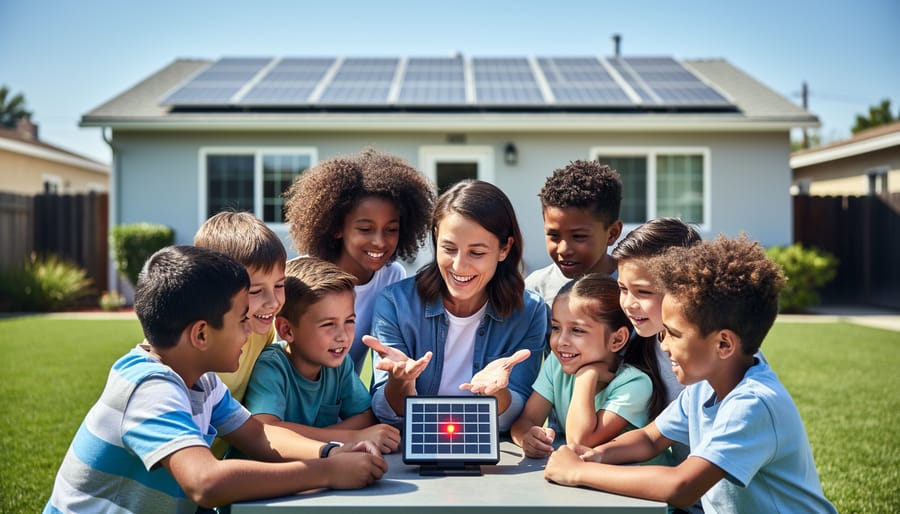
Educational solar programs teach children about renewable energy through hands-on experiences with solar technology, from building small solar-powered devices to understanding how panels work on their own homes. These initiatives combine science education with real-world sustainability lessons, helping the next generation grasp why solar energy matters and how it functions in practical terms.
For Los Angeles families, the connection between home solar and children’s learning runs deeper than classroom theory. When your house generates its own electricity, it becomes a living laboratory. Kids can track daily energy production, learn about photovoltaic conversion, and see firsthand how sunshine reduces electricity bills. That tangible link between science concepts and household savings makes renewable energy feel relevant rather than abstract.
The landscape of educational solar programs in 2026 spans everything from elementary school STEM kits to community workshops and utility-sponsored initiatives. Some programs lend portable solar panels to classrooms for experiments, while others partner with families who already have rooftop systems to create case studies. LA’s abundant sunshine and growing solar adoption create ideal conditions for these learning opportunities, whether you’re considering solar installation or already generating clean power.
This guide breaks down what educational solar programs offer, how they work in practice, and which options serve LA families best. You’ll discover program types ranging from formal school curricula to DIY home projects, understand the mechanics behind kid-friendly solar demonstrations, and find specific resources to turn your household solar system into an educational asset. Teaching children about solar energy doesn’t require advanced technical knowledge, just the right approach and accessible tools.
What Educational Solar Means for Today’s Students
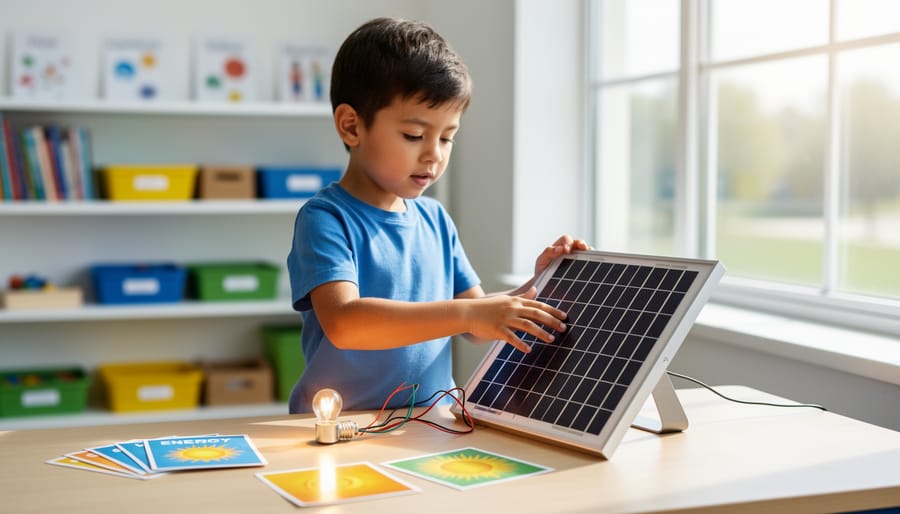
Educational solar describes a growing suite of programs that turn solar energy from an abstract concept into something children can touch, build, and understand. Rather than just reading about renewable energy in a textbook, students engage with solar panels through hands-on experiments, classroom demonstrations, and real-world applications tailored to their grade level. A second-grader might watch a small solar-powered toy car race across a desk, while a high school student learns to calculate energy output from photovoltaic cells in a physics lab.
Several core terms shape how we talk about solar education:
- Photovoltaic Learning
- Teaching students how solar panels convert sunlight into electricity through age-appropriate explanations and demonstrations of the photovoltaic effect.
- Renewable Energy Literacy
- The ability to understand energy sources, their environmental impact, and why solar power matters for our future, starting with basic concepts in elementary school.
- STEM Solar Programs
- Science, technology, engineering, and math curricula that use solar energy as the central teaching theme, connecting classroom lessons to real-world applications.
- Hands-On Solar Kits
- Physical sets that let students build working solar devices, from simple circuits to miniature solar panels, making abstract energy concepts concrete.
This type of education matters more in 2026 than it did a decade ago. California has set ambitious renewable energy targets, and children growing up in Los Angeles see solar panels on rooftops throughout their neighborhoods. Understanding how these systems work gives students context for the world they’re inheriting. Beyond environmental awareness, solar education opens career paths: students who develop early interest in renewable technology often maintain STEM occupational intention after high school positioning them for growing fields in clean energy engineering, installation, and design. When a child builds their first solar circuit, they’re not just learning science, they’re glimpsing a potential future.
How Educational Solar Programs Work
Educational solar programs guide children through a carefully designed learning journey that starts with simple observation and builds toward genuine scientific understanding. The process begins with helping young learners grasp that the sun produces energy we can see and feel, then introduces the idea that this energy can be captured and converted into electricity for everyday use.
In early elementary programs, teachers typically demonstrate basic concepts with small solar panels connected to fans, lights, or motors. Children watch these devices spring to life when exposed to sunlight, creating an immediate connection between the sun’s rays and usable power. They experiment by covering panels, changing angles, or moving between shade and direct light, discovering through hands-on trial how solar performance changes with different conditions.
As students advance, programs introduce simplified explanations of photovoltaic cells and the conversion process. Middle school curricula often include building small solar-powered devices or comparing the panel output explained in their experiments with different panel sizes and configurations. High school programs dive deeper into energy storage, battery systems, and efficiency calculations, sometimes using actual data from the school’s rooftop installation.
Field trips to solar farms or home installations bring the learning full circle. Students see professional arrays in action, meet technicians who explain maintenance and monitoring, and connect classroom concepts to real infrastructure producing clean energy for their community. Many programs in Los Angeles coordinate visits to local solar installations where families can observe commercial-scale systems and ask questions about design decisions and performance metrics.
The most effective programs layer these experiences throughout the school year rather than presenting solar as a single unit, allowing concepts to build naturally as children’s scientific thinking matures.
Types of Educational Solar Programs for Children
School-Based Solar Curricula
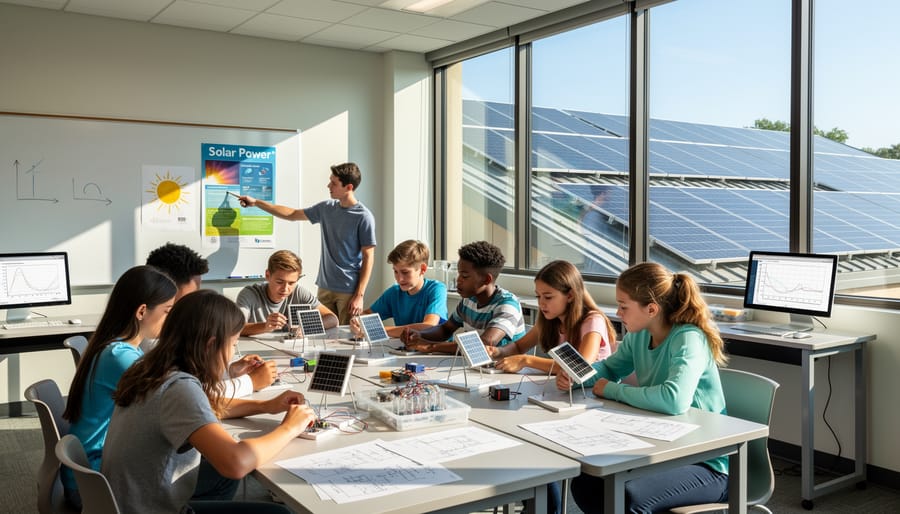
School-based solar curricula bring renewable energy education directly into classrooms across Los Angeles, starting with elementary students who learn basic sun-as-energy concepts through picture books and simple experiments. By middle school, students explore photosynthesis parallels and conduct voltage measurements with small panels. High school physics classes dive deeper into energy conversion, circuit design, and the science behind building photovoltaics.
Many LA schools have installed rooftop solar arrays that double as living laboratories. Students track real-time energy production on hallway monitors, comparing output on cloudy versus sunny days. Some campuses integrate solar data into math lessons, calculating kilowatt-hours generated per month or savings on utility bills. Teachers use these installations to demonstrate concepts like angle optimization and energy storage, turning abstract science into tangible observations students can see working above their heads every day.
Hands-On Solar Kits and Experiments
Hands-on solar kits give children direct experience with energy conversion through projects they can build themselves. Most starter kits include small photovoltaic panels, motors, and simple instructions that let kids as young as eight assemble working solar cars, fans, or light systems. These kits typically cost between $15 and $40, making them accessible for home use or classroom budgets.
Popular project types include solar-powered vehicle kits where children connect panels to motors and watch their creations move across a table, demonstrating how sunlight creates mechanical energy. Portable solar charging stations let older students build working USB chargers, teaching them about power storage and practical applications. Science-fair favorites like solar oven experiments show thermal energy capture using cardboard, aluminum foil, and plastic wrap to cook s’mores or melt chocolate.
Many Los Angeles after-school programs now stock reusable experiment kits that groups of children share. Parents can find quality options at local science stores, educational retailers, or online marketplaces. The best learning happens when kids test variables like panel angle, shade coverage, and weather conditions, turning simple toys into genuine scientific investigations.
Community Solar Education Workshops
Los Angeles offers numerous free and low-cost community workshops where families can learn about solar energy together. The California Science Center regularly hosts solar power exhibits featuring interactive displays that let children see photovoltaic cells in action and understand energy conversion through hands-on demonstrations. Many LA Public Library branches run seasonal solar science programs, particularly during summer reading months, where kids can build simple solar ovens or test small solar-powered devices.
Local community centers in neighborhoods like Silver Lake, Mar Vista, and Highland Park partner with environmental organizations to offer weekend solar workshops specifically designed for families. These sessions typically combine basic solar science education with practical demonstrations using portable panels and battery storage systems. Parents appreciate that these programs connect classroom concepts to real-world applications while introducing children to renewable energy careers.
The Griffith Observatory occasionally features special solar energy programming that ties astronomical sun studies to practical solar technology. Check your neighborhood community center calendar, as many Los Angeles locations offer quarterly or monthly solar education events at no cost, making this an accessible entry point for families curious about renewable energy.
Digital and Interactive Solar Learning Tools
Apps and online platforms bring solar education to screens where kids already spend time, turning passive device use into active learning. Interactive simulations let students virtually install solar panels on a digital house, adjust angles for optimal sun exposure, and watch real-time energy production data change with weather conditions. These tools strip away the intimidation of complex physics by making cause-and-effect visual and immediate.
Gamified platforms like solar energy challenges and carbon footprint trackers add competition and rewards that keep children engaged beyond a single lesson. Students earn points for optimizing virtual solar systems or compete with classmates to design the most efficient renewable energy setup for a fictional town. NASA’s Climate Kids website offers free solar games that explain photovoltaic science through space-themed missions and puzzles.
Virtual reality experiences take this further, some LA science centers now offer VR headsets where kids “shrink down” to electron size and travel through a solar cell, watching sunlight convert to electricity from inside the system. For parents without VR access, browser-based solar calculators designed for students let children input their own home’s roof size and zip code to estimate potential solar production, connecting abstract concepts to their actual neighborhood and making the technology tangible even through a tablet screen.
How LA Families Are Using Educational Solar at Home
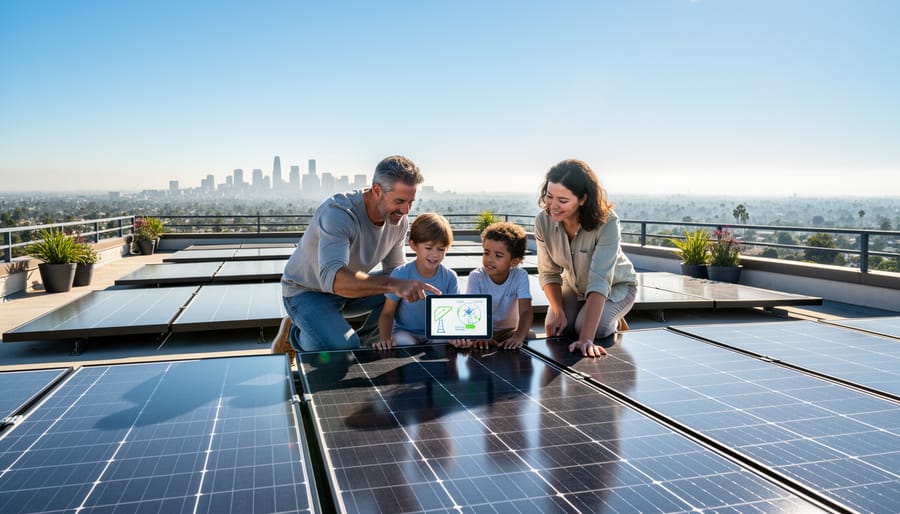
Los Angeles families with rooftop solar have discovered that their installations serve double duty as powerful teaching tools. Instead of letting their systems run in the background, these homeowners actively involve their children in the day-to-day experience of generating clean energy.
The Martinez family in Silver Lake turned their monitoring app into a nightly ritual. Each evening, their two kids check the day’s energy production, comparing sunny versus cloudy days and tracking monthly totals. When production dips, it sparks conversations about weather patterns and seasonal sun angles. The children have started connecting these numbers to their science lessons, turning abstract concepts about renewable energy into concrete data they can see and measure.
Parents are finding creative ways to make their solar systems hands-on learning experiences:
- Checking daily production graphs together and discussing what affects energy generation
- Comparing current utility bills to pre-solar statements to calculate monthly savings
- Observing scheduled solar maintenance visits to learn how professionals care for the equipment
- Using monitoring apps to track real-time energy flow from panels to household appliances
- Setting goals to optimize solar production by adjusting energy usage to peak sunlight hours
The Chen family in Pasadena took it further by creating a carbon footprint journal. Their middle-schooler calculates how many pounds of carbon dioxide their panels offset each month, translating kilowatt-hours into environmental impact. This transforms an invisible benefit into something tangible, the equivalent of planting trees or taking cars off the road.
These everyday interactions demystify renewable energy for children. Rather than solar being something that just happens on the roof, kids see it as an active system they understand and help manage, building both environmental awareness and practical math skills through their family’s investment in clean energy.
Cost-Saving Educational Solar Resources for Parents
Los Angeles families don’t need to spend hundreds on solar education materials. The city offers numerous free and low-cost resources that make hands-on solar learning accessible to every household.
Start with your local library system. Many LA County libraries maintain lending collections of solar experiment kits that families can check out for two to three weeks at no cost. These kits typically include small photovoltaic panels, LED bulbs, motors, and project guides for building solar cars or charging stations. Call ahead to reserve popular kits, especially during summer break.
The California Science Center in Exposition Park runs free weekend workshops where children build simple solar devices using recycled materials. Families pay nothing for admission or materials, and kids take home what they create. The Griffith Observatory also features permanent solar energy exhibits with interactive displays that explain photovoltaic technology at no charge.
For home experiments, dollar stores stock the basics. A $3 calculator with a solar cell works perfectly for demonstrating how light intensity affects power generation. Add aluminum foil, construction paper, and a thermometer (under $5 total) to create lessons on heat absorption and reflection. YouTube channels like “SciShow Kids” offer free step-by-step tutorials.
Download free curricula from NASA’s Climate Kids website or the National Renewable Energy Laboratory’s education portal. Both provide grade-specific lesson plans, and experiment instructions designed by scientists.
Parents installing solar panels can leverage LA solar rebates to offset system costs while turning their rooftop array into a permanent teaching tool. Real-time monitoring apps let children track daily production without additional equipment purchases.
These resources prove that quality solar education requires curiosity and creativity, not big budgets.
Common Questions About Educational Solar for Children
Parents often wonder when and how to introduce solar concepts to their children, and whether these educational activities translate into meaningful learning outcomes. The good news is that solar education can start surprisingly early and adapts well to different developmental stages.
What age can children start learning about solar?
Children as young as 5-6 can grasp basic concepts like “the sun gives us energy” through simple observation activities and picture books. Elementary students (ages 7-10) can handle hands-on experiments with small solar panels, while middle and high schoolers can tackle more complex topics like energy conversion efficiency and photovoltaic science.
Are solar education kits safe for children?
Yes, when age-appropriate kits are selected. Most children’s solar kits use low-voltage panels that pose no electrical hazard, and the components are designed with safety in mind. Always supervise younger children during assembly and use, and choose kits specifically labeled for your child’s age group.
How does learning about solar help with school performance?
Solar education reinforces core STEM skills including scientific observation, data collection, mathematical calculation, and problem-solving. Students who engage with hands-on solar projects often show increased interest in science classes and develop stronger critical thinking abilities that transfer to other subjects.
Can our home solar system be used for teaching?
Absolutely. Your monitoring app becomes a real-time teaching tool where children can track daily energy production, calculate monthly savings, and observe how weather affects output. Many LA parents involve kids in checking the system’s performance, turning routine monitoring into a practical math and science lesson.
The most effective starter projects depend on your child’s age and interests. Younger children enjoy building simple solar-powered toys or charging small devices with portable panels. Older students benefit from comparing solar output under different conditions, calculating payback periods for household systems, or designing their own solar-powered inventions. Start with one manageable project that connects to something your child already cares about, whether that’s a favorite toy, a science fair opportunity, or understanding the family’s electricity bill. Success builds confidence and curiosity for more advanced solar learning down the road.
Educational solar programs offer Los Angeles families a unique chance to turn their renewable energy investment into a lasting learning experience. When you install solar panels on your home, you’re not just reducing electricity bills and shrinking your carbon footprint, you’re creating a living classroom right in your backyard.
Your children can watch real-time energy production on monitoring apps, calculate monthly savings alongside you, and understand the direct connection between sunlight and the power running through your home. These aren’t abstract science lessons from a textbook. They’re hands-on observations of technology in action, making concepts like energy conversion and environmental stewardship tangible and relevant.
The dual benefit is clear: you gain financial savings and energy independence while your kids develop scientific literacy and environmental awareness that will serve them throughout their lives. In a city leading the charge toward renewable energy adoption, your solar installation becomes more than infrastructure, it transforms into an educational asset that grows in value as your children’s understanding deepens.
Start by involving your family in the research process before installation, let them help monitor performance afterward, and explore the free educational resources available throughout LA. The investment you make in solar today plants seeds for a generation that will innovate tomorrow’s clean energy solutions.

