


Solar Energy System Service: What It Includes and Why Regular Maintenance Matters
Your solar panels need professional servicing once or twice a year, plus routine cleaning every few months to maintain peak performance. For Los Angeles homeowners, this translates to an investment of roughly $150 to $300 annually for professional maintenance, a cost that typically pays for itself through sustained energy production and early problem detection.
Most solar owners discover this reality after installation: panels don’t simply run themselves for 25 years without attention. Dust, debris, and the region’s notorious Santa Ana winds gradually reduce efficiency by 15% to 25% if left unchecked. The good news? Regular service catches small issues before they become expensive repairs and keeps your system generating maximum savings month after month.
Understanding what maintenance actually involves helps you budget wisely and protect your investment. Professional service includes performance testing, electrical connection inspections, inverter checks, and thorough panel cleaning using equipment that won’t damage the delicate photovoltaic surface. While you can handle basic visual inspections and gentle rinsing yourself, comprehensive optimization requires specialized tools and expertise.
The Riverside family who installed panels in 2023 learned this firsthand. After skipping professional service for two years, they noticed their electric bills creeping up. A single maintenance visit revealed corroded connections and a failing inverter component, issues that would have cost thousands if left undetected. Their annual service now runs $250, but it’s preserved over $1,800 in annual energy savings.
The choice isn’t whether to maintain your solar system, but how to do it smartly and cost-effectively.
What Solar Energy System Service Covers
Professional solar system service covers far more than wiping down panels. A thorough service appointment examines every component that affects your system’s performance, safety, and longevity, typically taking two to four hours depending on your array size.
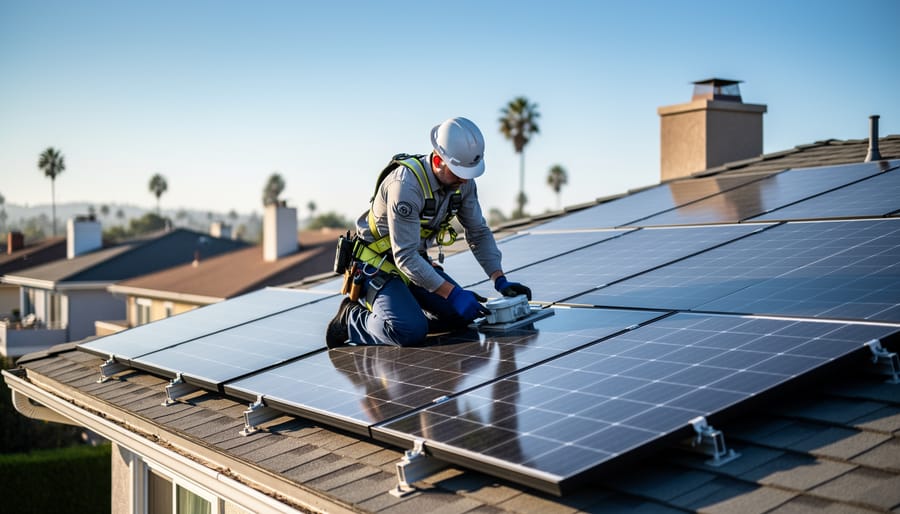
Panel inspection and cleaning form the visible part of the service. Technicians check for cracks, hot spots, and delamination while removing dust, bird droppings, and the pollen buildup that’s particularly heavy in LA’s spring months. Clean panels can restore 15-25% of lost production, directly impacting your panel output and monthly savings.
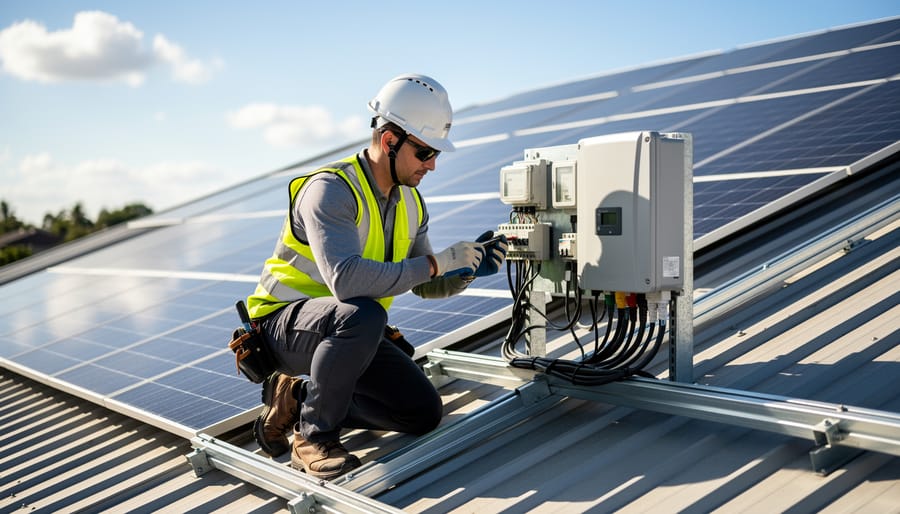
Electrical system checks ensure safe, efficient operation. Service includes inspecting all wiring for damage or loose connections, testing junction boxes for moisture intrusion, and verifying that circuit breakers and disconnects function properly. Los Angeles’ occasional Santa Ana winds can loosen hardware, making these checks essential.
Inverter diagnostics reveal how well your system converts DC power to usable AC electricity. Technicians analyze error codes, check temperature readings, verify firmware is current, and test cooling fans. String inverters and microinverters each require different diagnostic approaches, but both need regular monitoring to catch efficiency drops early.
Mounting and racking inspection protects your roof and system. Technicians examine all attachment points for corrosion or loosening, check flashing and sealant integrity, and verify that rails and clamps remain secure. Roof penetrations need particular attention in LA’s occasional heavy rains to prevent leaks.
Performance monitoring analysis compares your system’s actual production against expected output based on weather data and system specifications. This reveals gradual efficiency losses that you might not notice month to month but that cost hundreds annually. Technicians identify underperforming strings or panels and recommend specific fixes.
The service also includes checking your monitoring system itself, verifying that production data transmits correctly, testing any battery storage components if present, and documenting the system’s overall condition. You’ll receive a detailed report showing what was checked, cleaned, or adjusted, plus recommendations for any repairs or upgrades that would improve performance.
This comprehensive approach catches small issues before they become expensive problems, keeping your investment performing as promised.
How Often Your Solar System Needs Service
Most Los Angeles solar systems benefit from professional service twice a year, typically in spring and fall. These intervals align perfectly with LA’s seasonal patterns: spring cleaning removes winter grime and prepares for high-production summer months, while fall service ensures your system enters the rainy season in optimal condition.
System age also influences service frequency. Newer installations under five years old typically stick to the twice-yearly schedule unless visible issues arise. Systems between five and ten years need closer monitoring, particularly of inverter performance and electrical connections, though the same service interval usually suffices. Once your system hits the ten-year mark, consider increasing professional checks to three times annually, as components naturally degrade and minor issues can escalate more quickly.
Your environment matters more than calendar dates. Trees near your property mean more frequent debris accumulation. Heavy pollen seasons in spring require extra attention. If you notice a production drop exceeding 10% compared to the same period last year, schedule service immediately rather than waiting for your next routine appointment. Similarly, visible damage from storms, unusual inverter sounds, or error messages on your monitoring system warrant prompt professional inspection.
Between professional visits, quick monthly visual checks take five minutes. Look for obvious debris, check that your inverter shows normal operation, and review your monitoring app for unexpected dips in production. These simple habits catch developing problems early, often saving hundreds in repair costs by addressing small issues before they become major failures.
Most LA homeowners find that sticking to a consistent schedule prevents surprises. Mark your calendar for May and October service appointments, then adjust based on your specific conditions and system performance.
The Real Cost Savings of Regular Solar Maintenance
Regular maintenance keeps your solar panels operating at peak efficiency, and the numbers prove it. A well-maintained system in Los Angeles produces 15-25% more energy over its lifetime compared to one that’s neglected. For a typical 6kW residential system, that translates to $300-$500 more in annual energy savings.
Consider Sarah Martinez in Woodland Hills, who invested $180 annually in professional service for her five-year-old system. During a routine inspection, technicians discovered micro-cracks in three panels and corroding connectors that would have failed within months. The repairs, covered under warranty because she maintained regular service records, would have cost $2,400 out of pocket. More importantly, the early detection prevented a 30% drop in her system’s output that would have gone unnoticed until her next utility bill.
The warranty protection alone justifies maintenance costs. Most solar panel warranties require documented professional service to remain valid. Without service records, a $15,000 panel replacement becomes your responsibility, not the manufacturer’s. Annual maintenance costs $150-$250 but protects equipment worth tens of thousands.
Performance degradation sneaks up gradually. A system losing 2% efficiency each year due to dust accumulation and minor issues costs a 6kW system owner roughly $100 annually in lost production. Over ten years, that’s $1,000 in vanished savings, plus the compounding effect of reduced output. Regular cleaning and electrical checks reverse this trend, keeping production within 5% of original specifications.
The return on maintenance investment averages 3-to-1 in Los Angeles. Spend $200 yearly on service, and you protect $600+ in energy production, avoid repair expenses, and maintain resale value. When David Chen sold his Granada Hills home, the buyer’s inspector noted his complete service records. The well-maintained system added $4,200 to his home’s appraised value, far exceeding his total maintenance investment of $1,400 over seven years.
Skip maintenance, and small problems become expensive ones. What starts as a loose connection becomes a failed inverter. Surface dust becomes stubborn residue requiring panel replacement. The question isn’t whether you can afford maintenance; it’s whether you can afford not to maintain your investment.
DIY Checks vs. Professional Service
Most solar homeowners can, and should, handle basic monitoring tasks themselves. Check your system’s production app weekly to spot any sudden drops in output. Walk around your property every month or two to look for obvious issues: shading from new tree growth, visible debris on panels, or cracked glass. If you have ground-mounted panels, a quick visual inspection takes minutes. These simple checks catch problems early and cost you nothing but time.
You can also safely clean panels from the ground using a garden hose on a cool morning, though only if you can reach them without climbing. Never walk on your roof or lean a ladder against your array. Beyond these basic tasks, draw a firm line.
Leave electrical work to licensed professionals. Opening junction boxes, checking wiring connections, or testing voltage requires specialized training and safety equipment. One mistake can electrocute you or start a fire. The same goes for inverter diagnostics, those error codes need proper interpretation and tools you don’t own.
Roof-mounted repairs always demand professional service, even if the issue looks simple. Your solar company has fall protection equipment, roof training, and insurance. They know how to move panels without damaging mounting hardware or voiding warranties. They can spot underlying problems you’d miss: corroded connections, micro-cracks in cells, or compromised roof seals.
Think of DIY monitoring as your early warning system. You’re the first line of defense, catching changes in performance. But when you spot something wrong or suspect underperformance, call in the experts. That division keeps you safe, protects your equipment, and ensures repairs are done right the first time.
Choosing a Solar Service Provider in Los Angeles
Just as when you choose the right installer selecting a service provider requires attention to credentials and local expertise. Start with NABCEP certification for technicians, which signals proper training in both electrical work and building photovoltaics. Los Angeles-specific experience matters because providers familiar with coastal salt air, wildfire smoke impacts, and our particular weather patterns know exactly what to inspect and when.
Response time separates adequate companies from excellent ones. In LA’s climate, a malfunctioning system during summer means hundreds of dollars in lost savings monthly. Look for providers who guarantee 48-hour response for urgent issues and offer online monitoring so problems get flagged before you notice reduced production.
Service packages vary widely. Basic cleaning runs $100 to $200 but only addresses visible dirt. Comprehensive optimization services include thermal imaging to spot hidden panel defects, inverter performance analysis, connection testing, production forecasting against actual output, and detailed reporting. A $300 to $500 annual comprehensive service typically catches issues that would cost thousands to repair later.
Ask potential providers specific questions: Do they carry insurance for roof work? Will the same technician return for follow-ups? What’s included in writing versus what costs extra? How do they handle warranty claims with your original installer?
Be wary of providers who push unnecessary upgrades or can’t explain what they’re testing and why. The best companies educate you about your system’s condition, show you data trends, and recommend service intervals based on your actual performance and environment, not a one-size-fits-all calendar.
Common Questions About Solar System Service
Most homeowners wonder whether their solar panels really need professional attention or if nature takes care of the basics. Rain does rinse off loose dust, but it won’t remove the sticky residue, bird droppings, or mineral deposits that accumulate on panels in Los Angeles. Professional cleaning reaches what weather can’t, and service appointments catch electrical issues, loose connections, and inverter problems before they become expensive repairs.
Does rain clean my panels enough?
Rain helps but doesn’t replace cleaning. It removes light dust but leaves behind pollen, bird droppings, and mineral deposits that reduce efficiency by 15-25% over time.
What happens if I skip maintenance?
Skipping service leads to decreased output, potential warranty violations, and undetected problems that become costly repairs. A single failed inverter can cost $2,000-3,000 to replace when caught late.
Is service covered by my installer warranty?
Most warranties require proof of regular maintenance to remain valid. Check your agreement, as many cover equipment but not labor, and some explicitly require annual professional inspections.
How much does typical service cost?
Annual maintenance runs $150-300 for residential systems, while comprehensive optimization service ranges $300-500. This investment protects systems worth $15,000-30,000 and prevents repairs costing thousands.
The timing question comes up frequently. Spring service makes sense for most LA homeowners because it cleans off winter dust before summer’s peak production months. If your system shows a sudden drop in output or your monitoring app flags errors, call for service immediately rather than waiting for your scheduled appointment.
Financial concerns often center on whether service pays for itself. The math is straightforward: a $300 annual service that prevents a 20% efficiency loss on a system producing $1,800 yearly saves $360 in lost production, plus whatever repair costs it prevents. Many homeowners who invested in LA solar rebates to offset installation costs find that maintenance protects that initial investment far better than skipping service to save a few hundred dollars.
Knowing when to repair versus upgrade depends on your system’s age and the problem’s scope. Replace individual components like inverters or optimizers when they fail, but consider a full system upgrade if your panels are over fifteen years old and major components need replacement simultaneously.
Regular solar energy system service isn’t just maintenance, it’s protecting a decades-long investment that powers your home. Los Angeles homeowners who establish a consistent service routine see panels that produce at peak capacity year after year, avoiding the gradual decline that eats into savings. The costs are minimal compared to what you’d lose from efficiency drops or major repairs.
Think of it this way: you wouldn’t skip oil changes to save money on your car. Your solar system deserves the same care. With LA’s sunshine and your system’s potential 25-year lifespan, every percentage point of lost performance adds up to real money left on the table.
Start simple, schedule your first professional service, set up monitoring, and mark your calendar for annual check-ins. That small commitment keeps your panels working as hard as you did to afford them, turning sunshine into savings for the long haul.

